
Work lights on 12V, 24V and the systems above them
Most buyers never have to think about this column, because one band covers a 12V ute and a 24V truck. The models outside that band exist for a different kind of vehicle entirely.
A buyer searching for 24V work lights usually wants one thing confirmed: will the lamp run on a 24V truck without a converter in front of it. For most of the range the answer is yes, and the reason is that 34 of our 42 work lights take 12 to 24V DC, which covers a 12V ute and a 24V truck on the same part number.
That settles the common case in a sentence. The part of the voltage column worth reading is the other eight.
Most of the range never raises the question
Work lights go onto off-road vehicles, UTVs, ATVs, vans and trucks, and all of those sit on either a 12V or a 24V system. A 12 to 24V input covers both, so a workshop stocking one lamp for a mixed yard is not choosing between two part numbers, and a distributor is not splitting an order by the voltage of the vehicle it ends up on. We worked through what that does to a fleet order in our guide to 9-inch driving lights for trucks, and the logic is the same here.
What matters more than the band itself is that the band belongs to the model rather than to the range. Eight of the forty-two sit outside 12 to 24V, and the Voltage column on the work light range is where you check which one you are quoting.
On a vehicle, the bottom of the band does more work than the top
Two work lights take 9 to 32V, and the useful end of that is the 9 rather than the 32. A vehicle supply is not a constant: it drops while the engine is cranking, and it drops again across a long run of undersized cable with a few connectors in it. A lamp whose stated input starts at 9V has more of that movement inside its band than one that starts at 12V, which is the quiet argument for a wide input on a vehicle that is otherwise an ordinary 12V or 24V machine.
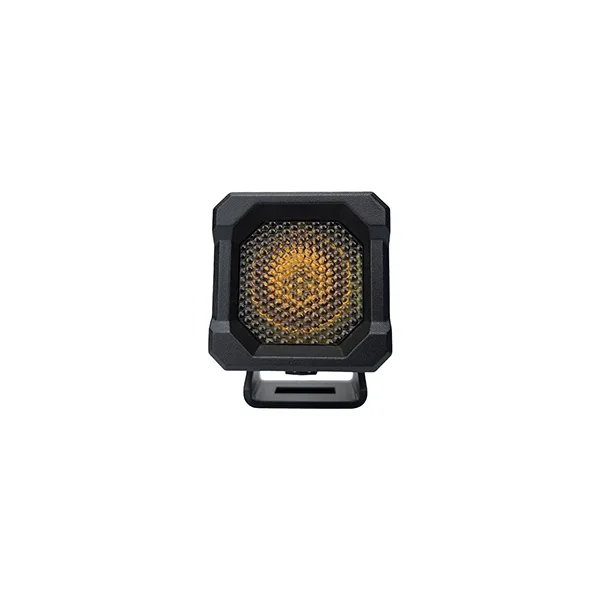
The TC-S20 is the small one: a 2-inch pod, 20W, 1,500 lumens on a Luminus chip, flood beam out to 40 to 80 metres, with the flood, spot and driving optics as the choice rather than the voltage.
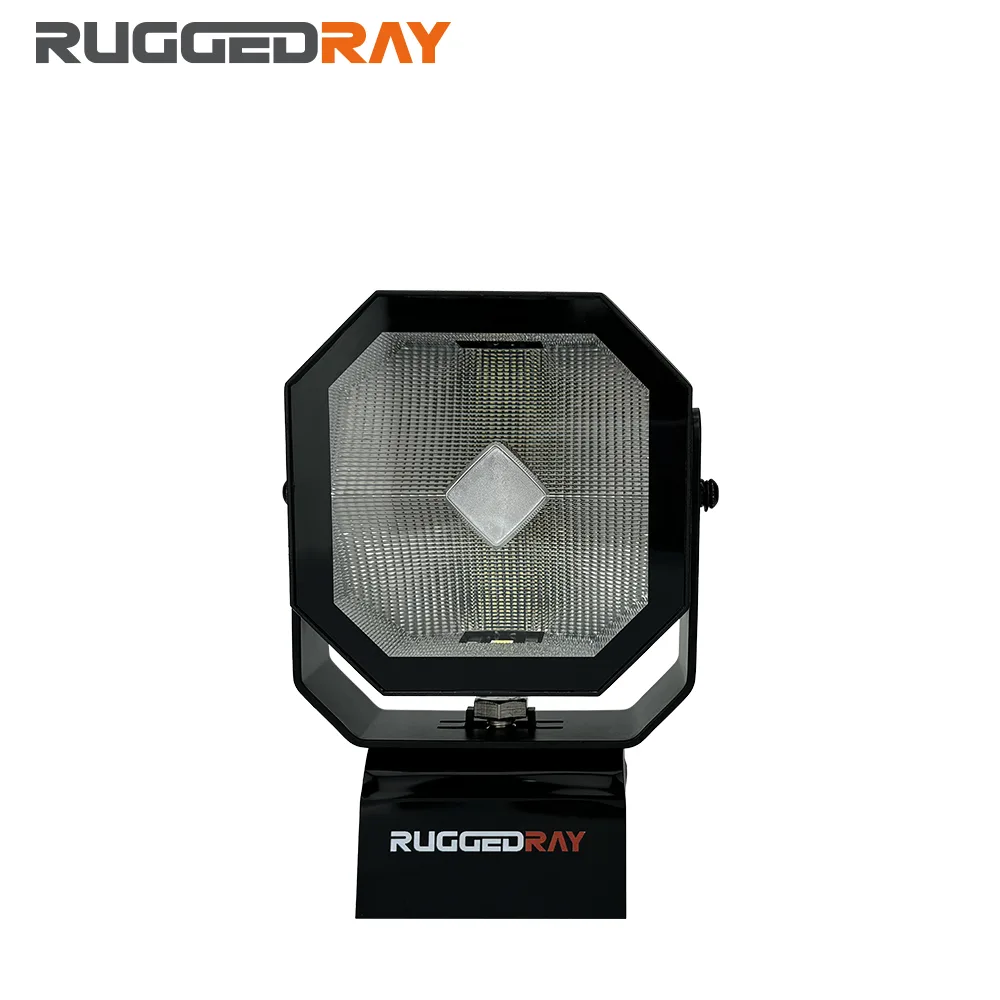
The TC-O50 is the same band at three times the output: a 5-inch octagonal housing, 50W, 4,500 lumens, flood to 50 to 100 metres. Both are ordinary catalogue lamps, and neither needs a conversation about your system before you order it.
The wider bands are in the range, not a special order
Six work lights take an input wider than 12 to 24V, and every one of them is a model you can order from the range as it stands. Very few buyers ask us for anything above 24V at all, which is why these six sit further down the listing than the lamps most orders are built from, but none of them is a one-off that has to be commissioned.
Two of the six are the 9 to 32V pair above. The TC-W30L takes 12 to 36V: a 6-inch lamp, 30W, 2,500 lumens, lux at 80 metres, on a Cree chip. The TC-O24W takes 12 to 40V and is a 5-inch, 24W, 1,800 lumens, with lux quoted at 150 metres on an Epistar chip, which is a longer throw than the wattage suggests and worth checking against the beam you actually want. The widest pair take 10 to 80V: the TC-18L is 6-inch, 18W, 1,200 lumens, lux at 50 metres, and the TC-O20 is also 6-inch, 20W, 2,500 lumens, lux at 100 metres.
Four of the six have no page of their own yet, so ask us for the specification sheet on any of those and you will get the full row rather than a summary. Custom work starts past this point instead: a system voltage higher than these bands reach, or a requirement none of the six meets, is quoted against the project and confirmed in writing before anything is made.
The reason is rarely a higher nominal voltage
A buyer who reads 10 to 80V as the premium option has the wrong model of what the band is for. These were built for large construction machines and heavy trucks, and on that kind of vehicle the supply is not only higher than on a pickup, it is less stable. The band is as much about what the supply does under load as about what it is nominally rated at, which is why it runs all the way to 80V instead of stopping neatly at the next standard system voltage.
Put the other way round: if your vehicles are 12V or 24V, a wider band buys you nothing you can sell. The 12 to 24V lamps are the ones with the photography, the detail pages and the depth of range behind them, and a wide input is not a specification upgrade.
Where 48V turns up
The 10 to 80V pair covers 48V systems, and 48V is the band that comes up once you leave cars and pickups behind. It appears on motorcycles, on construction vehicles, on agricultural machines and on large trucks, and the buyers asking are generally in Europe and North America.
That is worth knowing if you supply any of those segments, because a 48V machine is the one case where a standard lamp genuinely will not do and the conversation has to start with the system rather than with the beam.
The coloured versions go somewhere else entirely
Three work lights offer red, blue or yellow as an option instead of white, and they are exactly three of the wide-input models above: the TC-W30L, the TC-18L and the TC-O20. That overlap is not a coincidence. Those lamps are bought for plant and for forklifts, where a coloured lamp is used as a safety marker around the machine rather than as working light, and plant is also where the unstable high-voltage supply lives.
If you are quoting a 4x4 or a truck, the coloured options are not the ones to put in front of your customer. If you are quoting a materials-handling fleet, they may be the only part of this range that matters.
One band belongs to a plate light rather than a work light
The 10 to 30V entry in the range is the TC-P01, which is an LED licence plate frame light built to a standard EU plate size. It sits in this listing because of how the line is organised rather than because it competes with anything above it, and it is worth knowing before you spot 10 to 30V in the table and ask us for it as a work lamp.
Voltage settles, then current
Picking the band is the easy half. The number that decides what your customer can actually run is current, and a 24V system draws half the amps for the same lamp, which is the single biggest reason a 24V truck fits more onto one panel. We set that out with worked examples in sizing a switch panel by total current.
What to check before you quote
Read the Voltage column on the LED work light range against the vehicle rather than against the range summary, because the band is a property of the model. For a 12V or 24V vehicle almost everything on that page fits and the decision moves to beam, size and mounting. For a machine above 24V, tell us the system voltage first and we will tell you whether it is a catalogue lamp or a custom build before you quote your customer.