
Same 40W, same 6,000 lumens, 65 metres or 400
Three lamps on our own range run the same 40W, the same Osram emitters and the same 6,000 lumens. One reaches 65 metres and one reaches 400. Nothing is wrong with either number — the optic is doing it.
Three lamps from our own range. All 40W. All Osram emitters. All rated 6,000 lumens.
The TC-R12 reaches 65 metres. The TC-S18 reaches 80. The TC-SS40 reaches 400.
Every one of those numbers is correct. The emitters are not doing it and the wattage is not doing it. What separates them is the optic sitting in front of the LED — whether it spreads the light out or gathers it up. That is all spot and flood are, and the choice changes your night driving more than any figure printed on the box.
The photograph gives it away before the spec sheet does
Put two of them side by side and you can see it without reading anything.
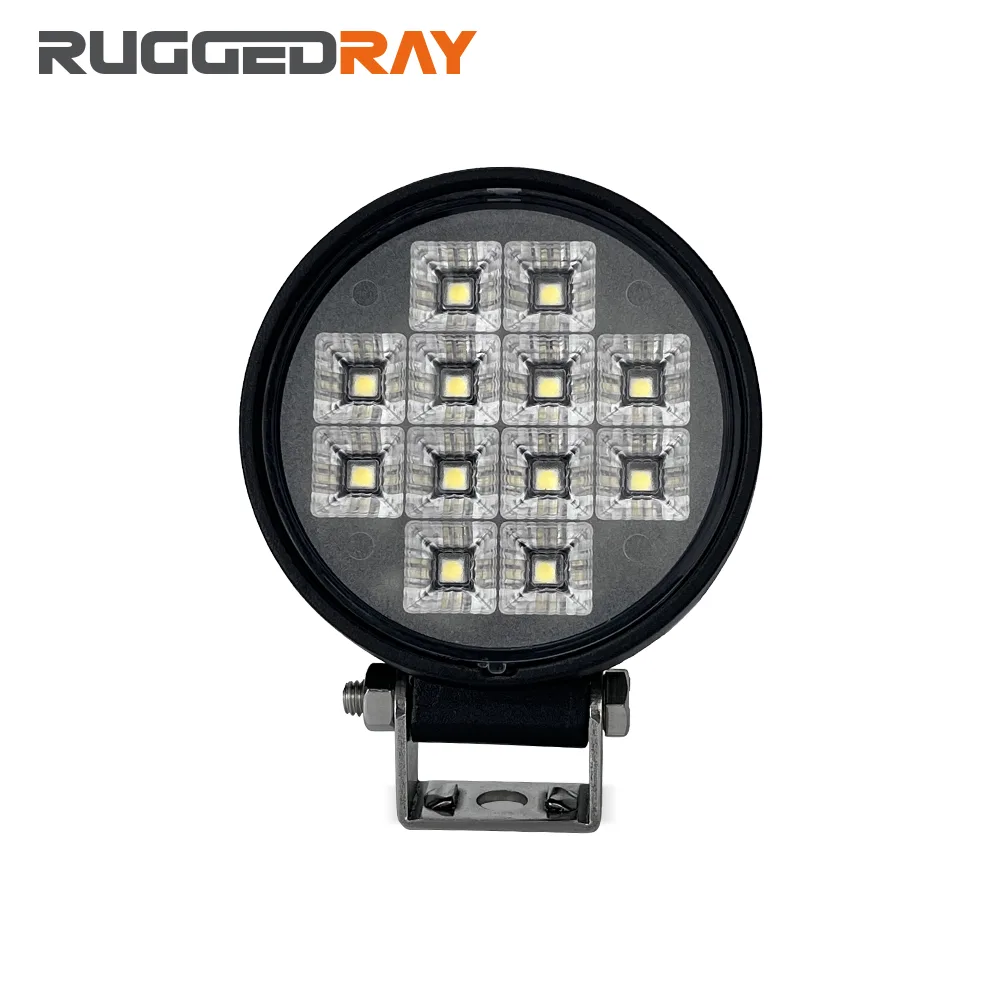
The TC-R12 carries twelve emitters spread flat across the face, each behind its own shallow lens. Light leaves it at a wide angle, close in, filling a broad patch of ground.
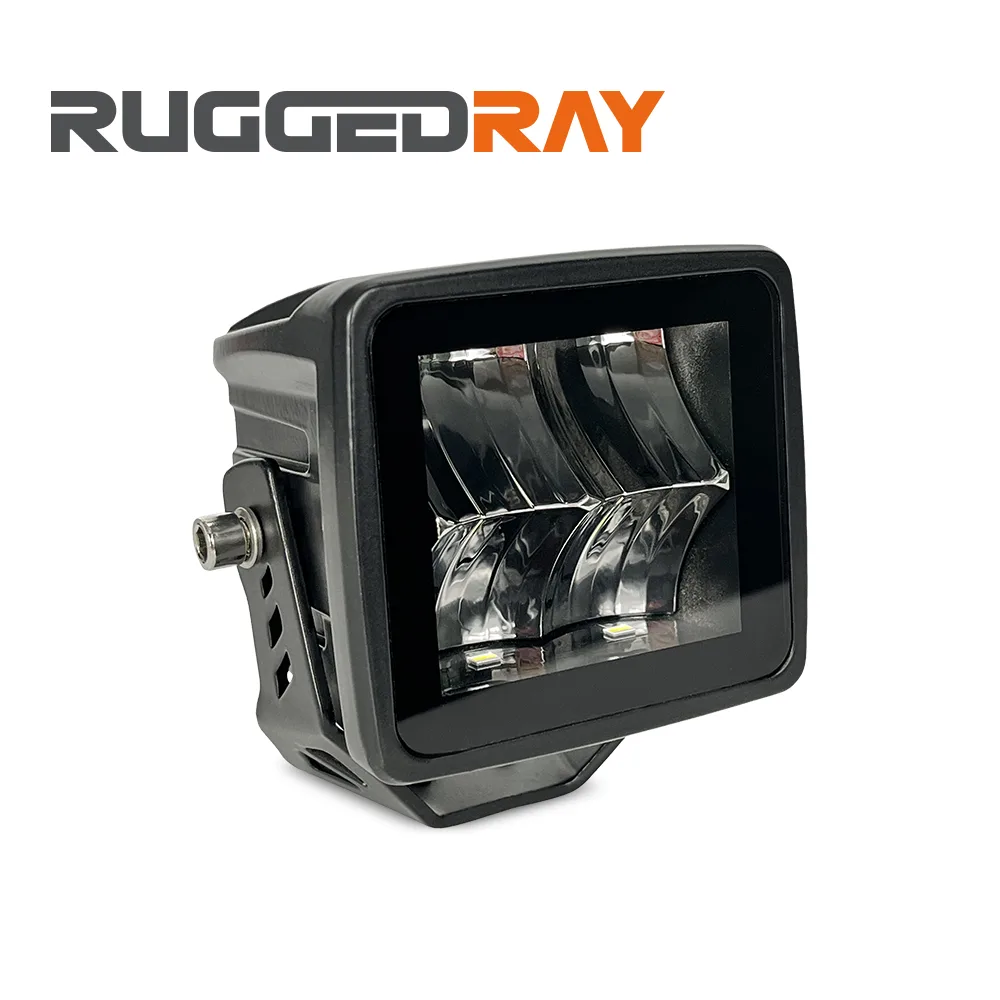
The TC-SS40 puts fewer emitters behind deep curved reflectors. Those reflectors catch light that would have gone sideways and turn it forwards. Same power going in, gathered into a column instead of a wash.
Six thousand lumens either way. One lands it across the width of a track, the other puts it 400 metres up the road.
These are lights for driving, not for parking
Worth saying plainly, because the category name reads the other way in most catalogues: we build these as auxiliary driving lights. They earn their keep while the vehicle is moving, filling in what the headlights leave out.
That splits the two patterns cleanly.
Spot is for distance. It buys you reading time — the washout in the track, the animal at the verge, the gate at the end of the paddock — far enough ahead that you can still do something about it at speed.
Flood is for everything the headlights miss at close range. The edges of the track. The corner you are already turning into. The bank on your left when you are picking a line. And, behind you, the whole reason people buy these in pairs: reversing, and backing onto a trailer.
Reversing and towing are the two jobs our customers name most often. Both are flood, every time. A spot on the back of a vehicle lights a bright circle on the trailer and leaves the drawbar in the dark.
A roof bar is usually both
The layout most builds land on is a combination: spot in the middle, flood on the outside.
The centre pair reaches. The outer pair fills in the width the centre pair gives up. Switch them on together and the far end of the track and the edges of it arrive at the same time.
Some builds run all spot. It is less common, and it suits someone who drives open ground fast and already has enough close-in light from the headlights. What it is not is a general-purpose answer — all spot on a tight, twisting track gives you a bright tunnel and black corners.
Spot measures brighter, which is why it ends up doing close work too
Here is something we see constantly and would rather explain than pretend away. Because a spot concentrates the same lumens into a smaller cone, it reads far brighter — on a lux figure and to the eye. Buyers in the US and Europe tend to shop on brightness first, so plenty of them fit spots and then use them at close range — reversing, manoeuvring, picking a line at walking pace.
That is not a mistake. It is a real preference and it works, as long as you know what you traded for it. A spot used close in gives you a hot centre and dark edges, and in rain, dust or snow the concentrated column throws more back at you. If that is how you want to run yours, aim them down harder than you think and put at least one flood on the same circuit for the width.
Reading the range by two numbers
Every model on the line publishes lumens and a beam distance to the 1-lux point. Once you know what the pair is telling you, the range sorts itself.
Wide and close — light across the track, the sides, behind you:
| Model | Power | Lumens | Beam distance |
|---|---|---|---|
| TC-R12 | 40W Osram | 6,000 | 65 m |
| TC-S18 | 40W Osram | 6,000 | 80 m |
| TC-R30 | 35W Osram | 6,000 | 115 m |
Long and narrow — light up the road:
| Model | Power | Lumens | Beam distance |
|---|---|---|---|
| TC-S60W | 60W Cree | 6,500 | 330 m |
| TC-S40 | 40W Osram | 3,800 | 400 m |
| TC-SS40 | 40W Osram | 6,000 | 400 m |
| TC-W45 | 45W Cree | 3,500 | 425 m |
| TC-R40W | 40W | 5,000 | 430 m |
| TC-R80 | 80W Osram | 6,800 | 500 m |
Look at the TC-W45 and the TC-R30 together. The TC-W45 makes 3,500 lumens and reaches 425 metres; the TC-R30 makes 6,000 and stops at 115. Nearly twice the light, a quarter of the reach. Shop on the lumen figure alone and you will pick the wrong one about half the time.
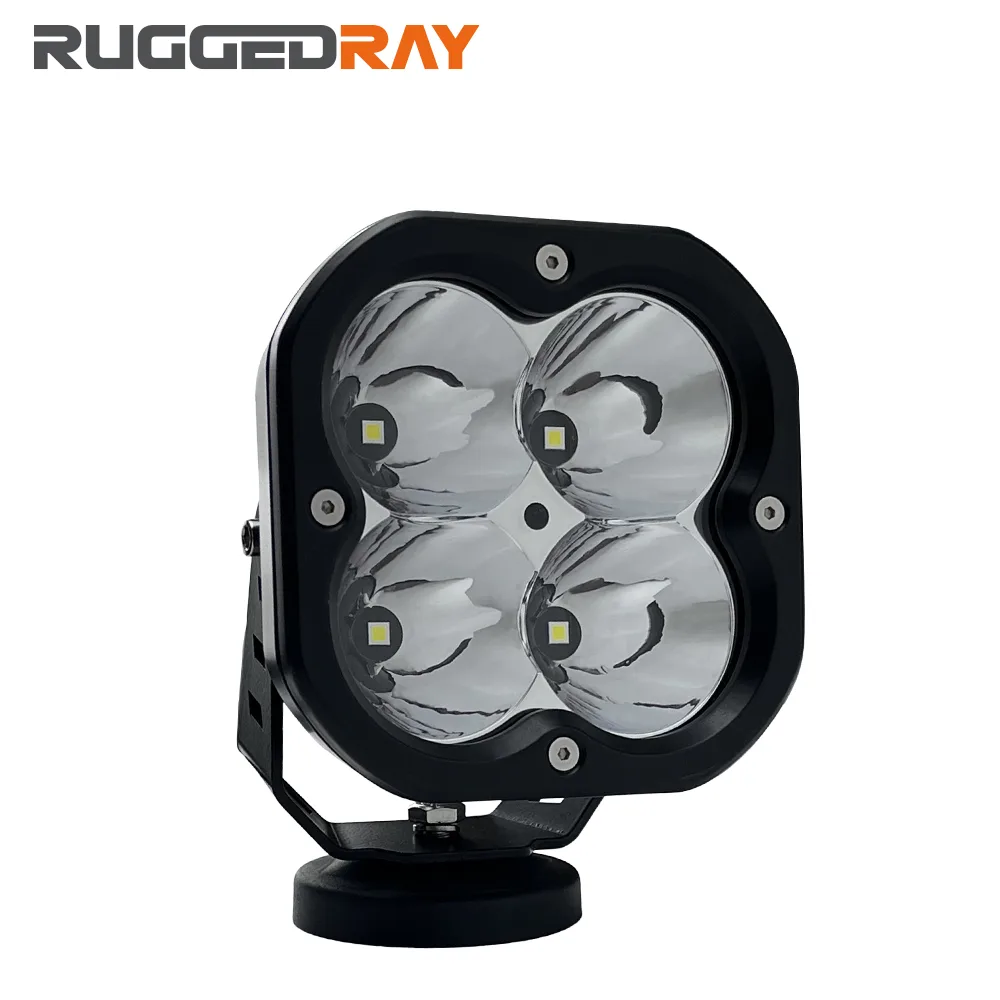
Two more solve specific problems. The TC-4R40 is a direct fit for the 2009–2022 Toyota 4Runner, Tacoma and Tundra fog light position — 40W Cree, 6,500 lumens, 350 metres, no bracket to fabricate. At the other end of the scale the TC-S5 is 1.5 inches across, 5W and 600 lumens, and splices together, for the places where nothing bigger will physically go.
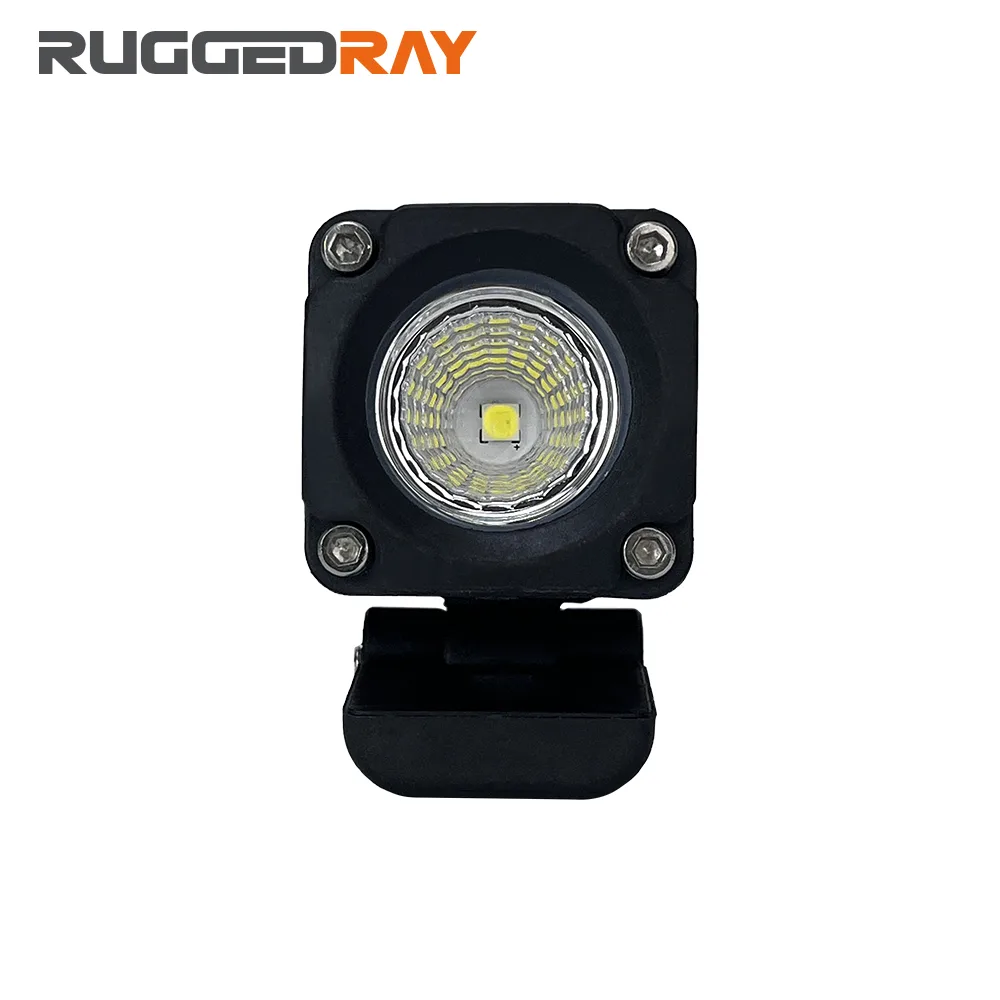
All of them are IP68, run 12–24V, and carry a five-year warranty.
Aim is worth more than the last 50 metres
Every lamp on this line ships on a bracket that adjusts through the vertical, so you set the angle after it is bolted down. Use it. A flood pointed slightly too high stops lighting the track and starts lighting your own bonnet, and the glare off that costs you more night vision than the lamp gives back. A spot pointed too high lights the tops of the trees.
Set them on flat ground at night, against a wall or a fence at a known distance, before you rely on them.
Wiring them up
None of these lamps has a switch in it. That is deliberate — a switch on the lamp is a switch you cannot reach from the driver’s seat.
So you have two ways to control them. The simple one is an optional switch harness, which we build in a one-lamp and a two-lamp version. Relay, fuse, switch, done. For a single pair on the front of a vehicle, that is the right answer and there is no reason to spend more.
The other way is where most builds end up eventually. Auxiliary lights are rarely the only thing being added, and every pair you fit is another switch, another fuse and another run back to the battery. A switch panel collapses that into one feed and one control box, with per-channel current ratings so a light bar and a set of floods are not sharing a limit. If you are not sure how many circuits your build actually needs, sizing a switch panel by current rather than switch count has the arithmetic.
The short version
Lumens tell you how much light. Beam distance tells you where it goes. Spot for reach, flood for width, most roof bars want both — and a spot pressed into close-range work is a fair trade, as long as you aim it low.
The full range of compact auxiliary lights lists lumens and beam distance on every model, so you can sort it the way this article does. For the same reasoning applied to full-size driving lights, lumens buy brightness, they do not buy distance is the companion piece.
Custom colours, private-label branding and higher-output builds are available — tell us what you are building and we will tell you where it lands.